






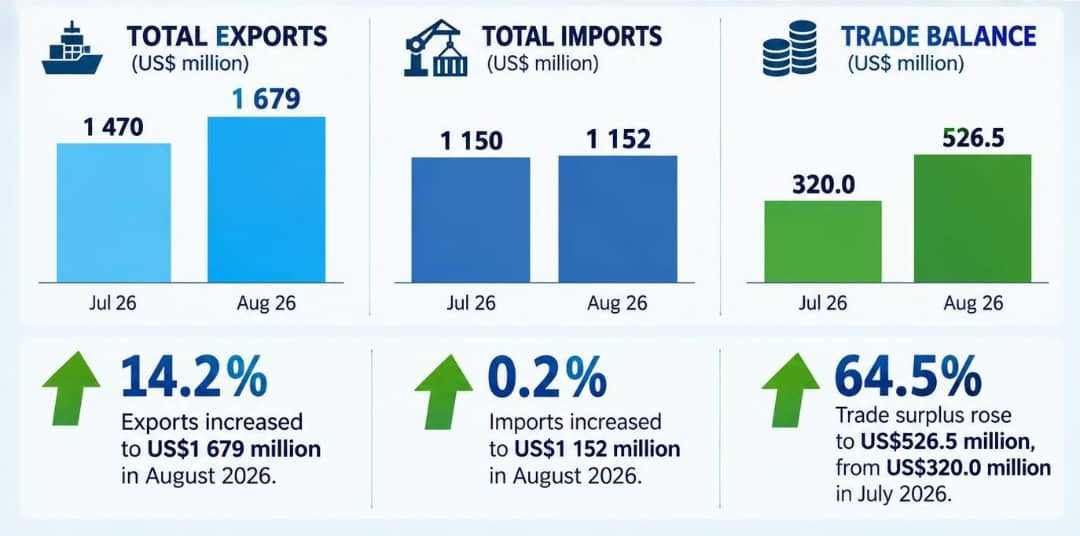
Zimbabwe’s trade surplus surged 64.5% to US$526.5 million in August, as exports accelerated sharply while imports remained almost unchanged, underscoring both the strength and the structural vulnerabilities of the country’s external trade position.
The surplus rose from US$320.6 million in July after exports jumped 14.2% month-on-month to US$1.679 billion, from US$1.470 billion. Imports, by contrast, increased by just 0.2% to US$1.152 billion.
The August figures represent a dramatic improvement from a year earlier. Exports were about 91% higher than the US$878.2 million recorded in August 2025, while the monthly trade surplus has expanded from just US$7 million during the same month last year.
The acceleration has also transformed the trajectory of Zimbabwe’s trade account during 2026. Exports totalled approximately US$2.91 billion during the first quarter, about 59% above the corresponding period in 2025. The second quarter produced another increase, with exports reaching roughly US$3.12 billion, taking first-half merchandise exports to approximately US$5.89 billion, compared with about US$3.87 billion in the first half of 2025.
Zimbabwe recorded a US$169.6 million trade deficit in April after exports fell 15% month-on-month to US$792.3 million against imports of US$961.9 million. The position deteriorated further in May before exports rebounded sharply in June, when they jumped 63.1% to US$1.442 billion and the country returned to a US$239.1 million surplus.
The subsequent increase to US$1.470 billion in July and US$1.679 billion in August suggests that the second-quarter recovery has extended into the third quarter.
ZimStat data show that Zimbabwe’s exports remain heavily concentrated in minerals and a small number of markets. In July, semi-manufactured gold accounted for 34.1% of exports, other mineral substances 21.7% and nickel mattes 13.5%. Together, the three categories generated almost 70% of the month’s export earnings.
The same concentration was evident in June. Semi-manufactured gold accounted for 40.5% of exports, nickel mattes 22.2% and other mineral substances 14.4%, meaning the three categories contributed more than three-quarters of total exports.
Economist Walter Mandeya warned that such concentration leaves the economy vulnerable to changes in commodity prices and external demand.
Related Stories
“When you have over 90 percent of your exports going to just three countries and over 75 percent coming from just three products, you are effectively placing your entire economy at the mercy of external developments beyond your control.”
The concentration is also geographic. The United Arab Emirates, South Africa and China accounted for more than 90% of Zimbabwe’s exports in June, reinforcing the dependence on a narrow group of destinations as well as commodities.
Zimbabwe is generating substantially more foreign currency from exports, but much of the increase is still being generated from products exposed to international commodity cycles.
Gold has been the most significant contributor. Gold export receipts reached about US$2.6 billion in the first eight months of 2026, up sharply from approximately US$1.62 billion during the same period last year. August alone generated about US$417.5 million in gold receipts.
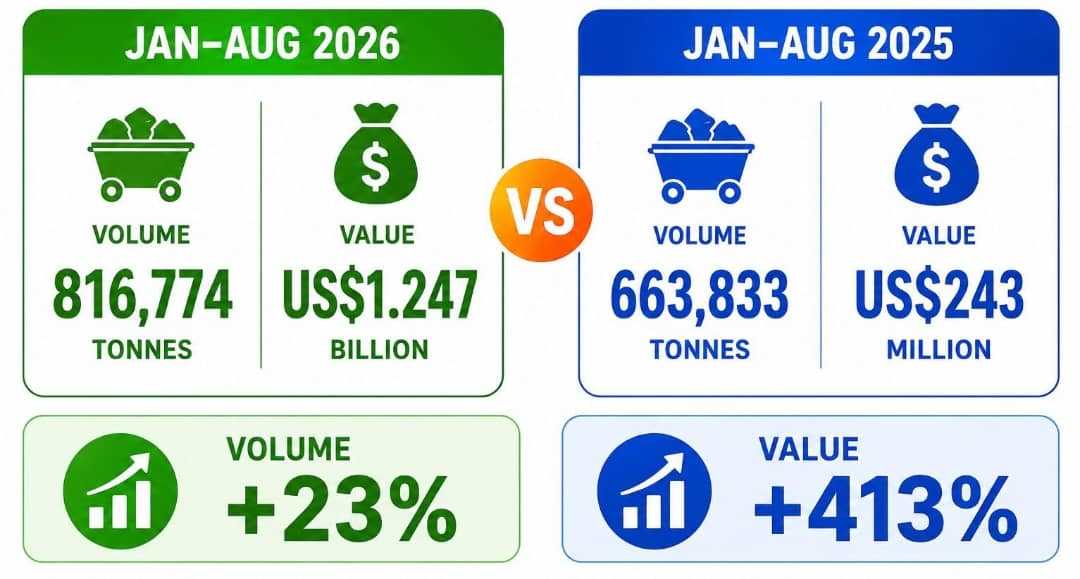
Lithium has also become a major contributor. Lithium concentrate exports reached US$1.247 billion between January and August, compared with about US$243 million during the same period in 2025. The value increase was substantially greater than the increase in volumes, highlighting the role of prices and the composition of exports in driving earnings.
The dependence on commodities is particularly important because some of the country's mining output has not increased at the same pace as export earnings. Data cited from reports showed first-quarter production declines in several minerals, including chrome, nickel, copper, cobalt and diamonds, even as the overall value of mineral exports remained strong.
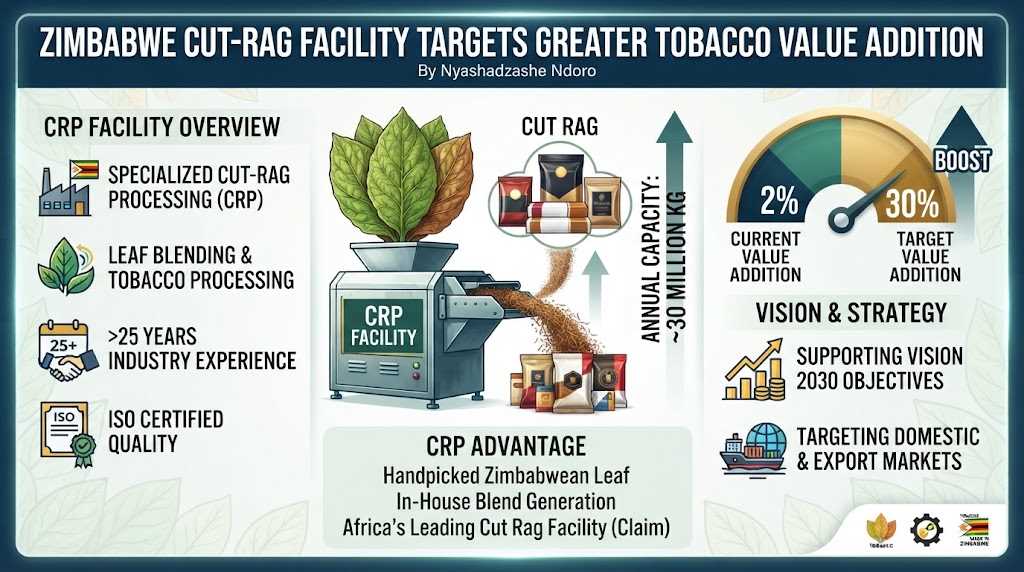
ZimTrade data show that value-added exports increased 34.4% to more than US$200 million between January and April 2026, from about US$149 million during the corresponding period last year. Engineering steel exports increased 165.6% to US$77.9 million, while manufactured tobacco exports rose 33.5% to US$45.9 million.
ZimTrade chief executive Allan Majuru has linked the expansion of higher-value exports to efforts to diversify Zimbabwe’s trade base, saying the country's growing international profile could support its “broader trade diversification agenda.”
On one level, Zimbabwe’s external position has strengthened considerably: first-half exports were about 52% higher year-on-year, while August exports were almost double their level a year earlier.
On another, the underlying export structure remains concentrated in gold, lithium, nickel, platinum-group metals and other mineral products, with a limited number of markets absorbing a large share of the country's shipments.







Leave Comments